
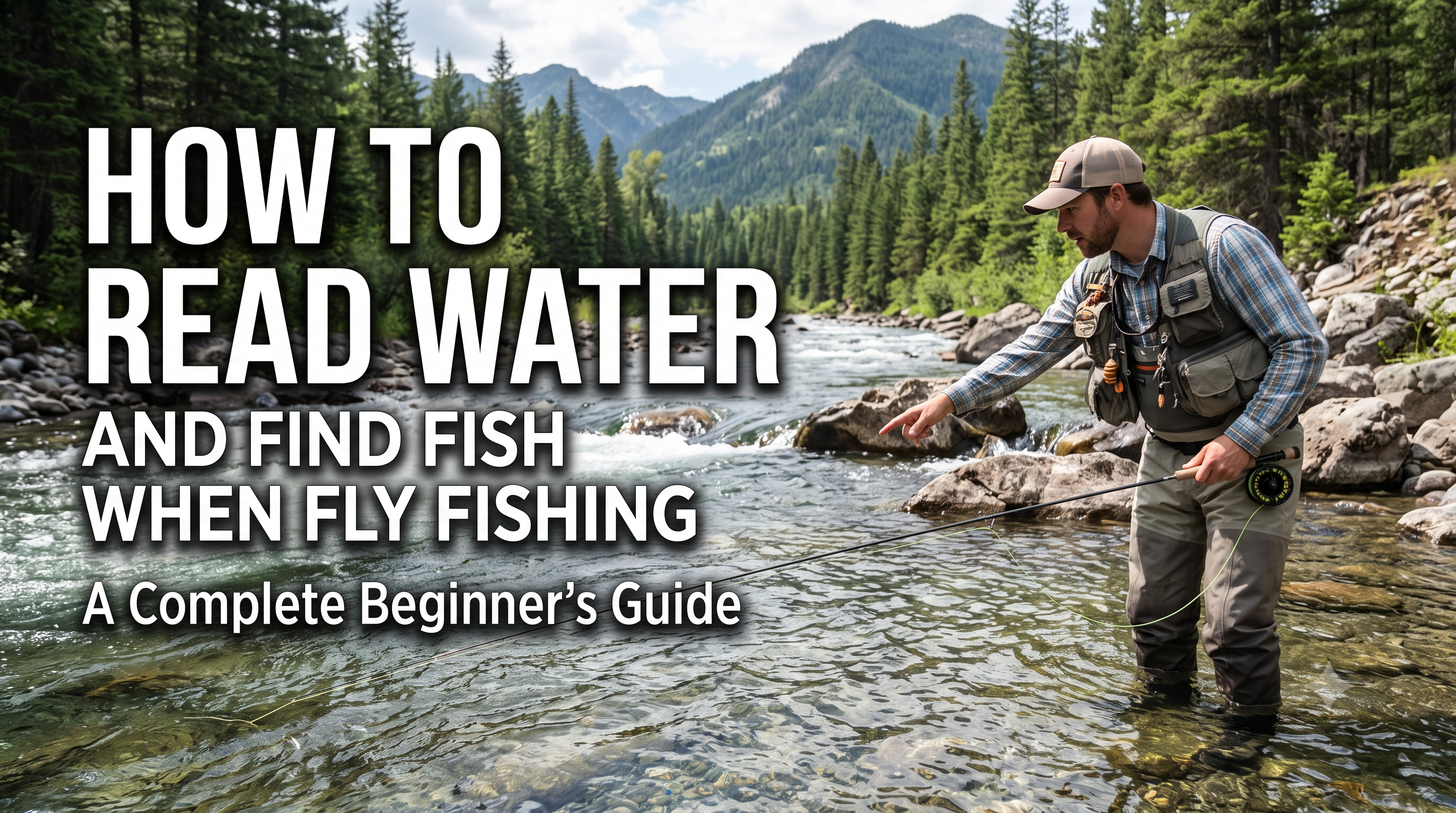
If you’ve ever stood at the edge of a beautiful stream, rod in hand, and thought “this looks perfect… but where are the actual fish?” you’re not alone. One of the biggest frustrations for new fly anglers isn’t casting — it’s knowing where to cast. Even the most perfect cast won’t catch fish if you’re targeting empty water.
At Hushden, we built our brand around making fly fishing simpler and more accessible. As lifelong anglers who’ve spent decades wading streams all over the country, we know that reading water is a skill anyone can learn. You don’t need years of experience to spot good holding water — you just need to know what to look for. This guide breaks down exactly how to find fish and pick the best fly fishing spots, even on a stream you’ve never fished before.
Why Fish Hold Where They Do: The Basic Rule
Before we get into specific spots, there’s one core principle that explains almost everything: trout and other stream fish want three things — food, safety, and energy efficiency. They won’t waste energy swimming in fast current if they don’t have to. Instead, they tuck themselves into slower water right next to fast current, where food drifts by and they can dart out to eat without working hard.
Once you start looking for this “slow water near fast water” pattern, good fishing spots will jump out at you everywhere.
6 High-Probability Fly Fishing Spots to Look For
These are the most reliable places to find fish in almost any stream or river. Learn to spot them, and you’ll catch more fish on every trip.
1. Pools (Deep, Slow Water)
Pools are the deep, calm sections of a stream where the current slows down and the water gets deeper. They’re the most obvious fish-holding spots, especially on bright, sunny days.
- Why fish love it: Deep water gives trout safety from birds and predators, and the slow current lets them rest. Larger, older trout often spend the day in pools and move into shallower water to feed at dawn and dusk.
- How to fish it: Cast your fly along the edges of the pool where slow water meets faster current. Fish often sit right on that seam waiting for food to drift by.
2. Riffles (Shallow, Fast Water)
Riffles are the shallow, bubbly, fast-moving sections where water runs over gravel and rocks. They might look too shallow and fast for fish, but they’re actually some of the best feeding spots on the stream.
- Why fish love it: Riffles churn up oxygen and wash insects off the rocks, creating a constant supply of food. The broken surface also hides fish from predators above, so they feel comfortable feeding even in bright daylight.
- How to fish it: Fish the bottom edge of the riffle where it drops into deeper water. That’s where trout sit, picking off food as it drifts out of the fast water.
3. Eddies & Backeddies
An eddy is a spot where the current circles back and flows upstream, usually behind a large rock, log, or bend in the river.
- Why fish love it: Eddies are like natural conveyor belts for food. Insects and debris get trapped in the circular current, and fish can sit in calm water and eat without moving much.
- How to fish it: Cast your fly into the calm center of the eddy and let it drift naturally. Fish often hold right along the seam where the eddy meets the main current.
4. Undercut Banks
On the outside of river bends, the current cuts into the bank, creating a small overhang and deep water right up against the shore.
- Why fish love it: The overhanging bank provides cover and shade, and insects regularly fall into the water from the grass and trees above. Big trout especially love hiding under cut banks during the day.
- How to fish it: Keep your cast tight to the bank. Drop your fly right up against the edge and let it drift along the undercut. Accuracy matters more than distance here.
5. Boulders & Structure
Any large rock, log, or submerged object in the river creates a pocket of slow water behind it.
- Why fish love it: The rock breaks the current, giving fish a place to rest while still having easy access to food drifting by in the main current. Even a single medium-sized rock can hold one or two trout.
- How to fish it: Cast just above the rock and let your fly drift naturally down the side and into the slack water behind it. The first few feet behind the rock are usually the sweet spot.
6. Seams (Current Breaks)
A seam is the invisible line where fast water meets slow water. You can see it as a smooth line on the surface between choppy fast current and calmer water.
- Why fish love it: Seams are the ultimate feeding lane. Fish sit in the slow side, conserving energy, and dart out into the fast water to grab food as it drifts past.
- How to fish it: Cast parallel to the seam, not across it. Let your fly drift right along that edge. This is one of the most consistent places to catch fish on any stream.
How to Spot Active Fish: Read the Surface
Once you’ve found good structure, look for these visual clues that fish are actively feeding:
- Rises: A small ring or splash on the surface means a trout is eating insects on top. If you see multiple rises in the same area, that’s a dry fly goldmine.
- Bulges: A soft, slow rise under the surface usually means a fish is taking nymphs just below the surface.
- Flash: A quick silver glint under water is a fish turning to chase food.
If you don’t see any surface activity, don’t worry — most fish feed under the surface most of the time. Good structure is still your best bet.
How Time of Day & Season Change Where Fish Sit
Fish move around based on light, water temperature, and food availability:
- Early morning / late evening: Fish move up into shallow riffles and flats to feed. This is the best time for dry fly fishing.
- Midday, bright sun: Fish move into deeper pools, under cut banks, and behind heavy structure. Stick to nymphs and fish deeper.
- Spring / fall: Cool water temperatures mean fish are more active and willing to feed all day. You’ll find them spread out across more of the stream.
- Hot summer: Fish seek out the coldest, deepest water and areas with high oxygen, like the base of waterfalls and fast riffles. Early and late day fishing is most productive.
3 Quick Tips for Finding Fish on a New Stream
- Start downstream and work your way up. Walking upstream lets you sneak up on fish without spooking them.
- Watch the water for 5 minutes before you cast. Look for rises, seams, and structure before you wade in.
- When in doubt, fish the seams. If you can’t decide where to cast, the line between fast and slow water is almost always the right choice.
Final Thought
Reading water isn’t some secret skill only expert anglers have. It’s just learning to see the stream the way a fish sees it — looking for places that offer food, safety, and an easy meal. With a little practice, you’ll start spotting great fishing spots automatically, even on waters you’ve never visited.
At Hushden, we design all our gear to work with real-world stream conditions, so you can spend less time worrying about your equipment and more time focusing on the water. Whether you’re exploring a new stream or fishing your home river, having reliable, well-balanced gear makes every trip better.
Ready to put these tips to use? Explore our collection of beginner-friendly fly fishing gear, built for real days on the water.